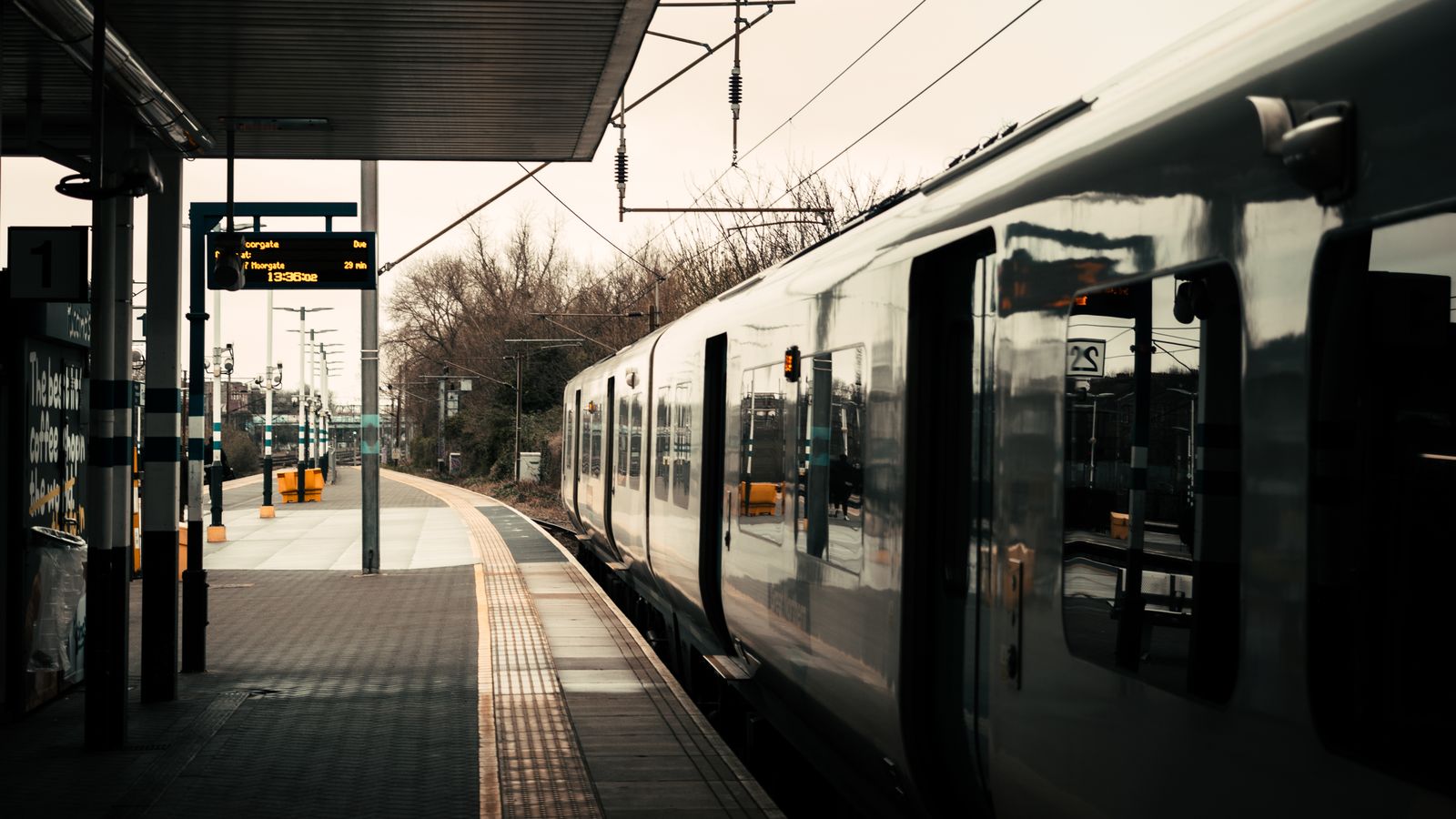
Long-distance coaches
National Express and Megabus reach places trains do not, at a third of the price and twice the time. London to Manchester is £14 and five hours. Book days ahead; walk-up fares are close to the train.
Cheapest, slowest
Transport
England has a dense, fast rail network and one of the most confusing pricing systems in Europe. Learn four rules and you will pay a quarter of what the man behind you in the queue is paying.
The four rules
English rail pricing rewards commitment and punishes spontaneity. These four habits are worth more than every discount scheme combined.
| Ticket type | Flexibility | When to buy | Typical premium |
|---|---|---|---|
| Advance single | One named train only | 12 weeks out | Baseline |
| Off-peak return | Any off-peak train | Any time | 1.8× baseline |
| Super off-peak | Restricted trains | Any time | 1.4× baseline |
| Anytime single | Any train, any day | Any time | 4–5× baseline |
| Season ticket | Unlimited, one route | Weekly or longer | For commuters |
Advance tickets are non-refundable but can usually be changed for a £10 fee plus any fare difference
Step by step
Six minutes of work, done once, twelve weeks before you travel. This is the single highest-value thing on the entire site.
Step one
Advance fares appear around twelve weeks before departure, sometimes eleven. National Rail publishes a booking horizon chart; set a calendar reminder for that morning.
Step two
In England two singles are almost always cheaper than a return, and never more expensive. Search each leg separately, every time.
Step three
Use the cheapest-fare finder rather than the timetable. A train forty minutes later is routinely half the price for the same journey.
Step four
Enter the journey into a splitting tool. If the saving is over £10 and the train stops at the split point, take it — it is entirely legal and you keep the same seat.
Step five
Free on all long-distance operators, and worth doing on any Friday, any train north, and anything touching a bank holiday.
Step six
Station wifi is unreliable and barcodes need to scan. Save the PDF and take a screenshot of the reservation as well.
Cities
London's contactless system is the one part of English transport that is genuinely simple. Tap the same card everywhere and it works out the cheapest total for you.
| Mode | Fare | Cap | Notes |
|---|---|---|---|
| London bus or tram | £1.75 | £5.25/day | Hopper: free changes within 60 min |
| Tube, zone 1 | £2.90 | £8.90/day | Zones 1–2 cap |
| Tube, zones 1–3 peak | £4.00 | £10.50/day | Peak 06:30–09:30, 16:00–19:00 |
| Elizabeth line, Heathrow | £13.60 | n/a | 32 min to Paddington |
| Manchester Metrolink | £4.80 | Day ticket | Zone 1 all-day |
| Newcastle Metro | £4.20 | Day ticket | DaySaver, all zones |
| Birmingham day bus | £4.50 | Day ticket | NXWM Daysaver |
2026 indicative fares · London caps apply per card per day
Everything else
Ranked roughly by how often a visitor actually needs them.
National Express and Megabus reach places trains do not, at a third of the price and twice the time. London to Manchester is £14 and five hours. Book days ahead; walk-up fares are close to the train.
Cheapest, slowest
Outside cities, buses are the only public transport and they are sparse. Two a day is normal in a village, none at all on a Sunday. Check the timetable before you plan a walk that ends at a bus stop.
Check Sundays
Black cabs are metered and expensive but the drivers genuinely know the streets. Apps work in every city and most towns. Neither makes sense from an airport.
Short hops only
London, Bristol and Cambridge are all workable by bike, with hire schemes from £1.65 a ride. Traffic is heavier and lanes narrower than in the Netherlands — ride assertively or take the canal path.
From £1.65
Only worth it for deep Cornwall, the Moors or Northumberland. Left-hand driving, single-track lanes with passing places, and city centres full of charging zones and cameras.
Rural only
Almost never sensible. London to Manchester is two hours by train, city centre to city centre, versus an hour of flying plus three hours of airports.
Skip it
If you do drive
Rural England is threaded with single-track roads bounded by stone walls and hedges, with passing places every few hundred metres. It is genuinely pleasant driving, provided you slow down and expect to reverse occasionally.
Journey times
| Route | Train | Coach | Car |
|---|---|---|---|
| London → Oxford | 0h 55m | 1h 40m | 1h 30m |
| London → Bath | 1h 25m | 3h 10m | 2h 30m |
| London → York | 1h 55m | 5h 20m | 3h 40m |
| London → Manchester | 2h 08m | 5h 00m | 4h 00m |
| London → Penzance | 5h 05m | 9h 00m | 5h 30m |
| Manchester → York | 1h 25m | 2h 40m | 1h 40m |
Fastest typical services · car times exclude traffic and parking
Disruption
Transport questions
Usually not. It only wins if you travel long distances most days and cannot commit to specific trains. For a fixed itinerary, Advance point-to-point singles booked twelve weeks out are almost always cheaper — often by half.
Yes. Split ticketing is entirely legal provided the train actually calls at the station where the tickets split. You do not need to leave the train. Splitting tools do the maths automatically.
Technically the ticket is void, but station staff can often endorse it onto the next service, especially if the delay was caused by a connecting train. Speak to someone at the gateline before boarding, not after.
Free and worth doing on long-distance journeys, essential on Friday afternoons, Sunday evenings and anything near a bank holiday. Regional and commuter trains do not offer reservations at all.
Partly. It is live on Manchester's tram network and rolling out elsewhere, but coverage is patchy. Outside London, buy a day ticket at the machine — £4–6 — and you cannot go wrong.
Ten minutes for a regional train, twenty for a long-distance departure from a London terminus where the platform is announced late. There is no security screening and no check-in.
Fare check
We will tell you when the Advance fares open, whether a split saves anything, and which train to take instead of the obvious one.
Cookies, kept minimal
No preference saved yet
Essential cookies keep the site working. Optional ones tell us which guides get read so we know what to update. No ad networks, no data sold, and you can change this any time.