01
The queue is a legal document
Form a line, join the back, do not test the edges. Queue-jumping produces no shouting whatsoever and permanent, silent judgement. Applies at bus stops, bars, cathedral doors and ski lifts.
Etiquette
Nothing here is enforced and all of it is noticed. English social life runs on indirectness, and the gap between what is said and what is meant is where visitors get lost.
The rules
None of these will be explained to you, and breaking them produces no visible reaction whatsoever. That is precisely the problem.
Form a line, join the back, do not test the edges. Queue-jumping produces no shouting whatsoever and permanent, silent judgement. Applies at bus stops, bars, cathedral doors and ski lifts.
Escalators have a standing side and a walking side. Blocking the left on the London Underground at half eight in the morning is the fastest way to feel genuinely unwelcome.
It means excuse me, pardon, after you, mind your back, and occasionally you are standing on my foot. Roughly eight uses a day is normal. Deploy freely.
English understatement runs one notch below reality. "Not bad" is good, "quite good" is very good, "interesting" may be a warning, and "with respect" precedes disagreement.
Accept a drink from a group and you are expected to buy the next round for everyone in it. If you cannot commit, say so cheerfully before the first round starts.
It is not filler, it is a handshake. Two exchanges about the rain and you have established that neither of you is a threat. Then you may proceed.
About an arm's length in conversation, and no touching beyond a handshake unless you know someone well. Standing too close reads as aggressive rather than friendly.
Money, property values and salaries are private. Politics and football are fair game, and often more fun.
Standard on the way off, especially outside London. A nod or a "cheers" is enough. Not doing it is noticed in small towns.
Bar staff track who arrived first without any visible system, and they are almost never wrong. Wait to be looked at, then order.
Quiet carriages are enforced by glare, not staff. Phone calls on speaker are a genuine social offence in a way that surprises visitors.
The English complain thoroughly, at length, to their companions, once out of earshot. Direct confrontation is avoided and considered slightly shocking.
The expected answer is "fine thanks, you?" It is not a genuine enquiry into your wellbeing, and answering honestly at length is disconcerting.
One person behind you, yes. A stream of twelve, no — release it gracefully and let the next person take over.
Restaurants and hairdressers, yes. Pubs, cafés, taxis and hotels, no. Rounding up a taxi fare is welcome but never expected.
Arrive on time for a restaurant, a train, or a meeting. Arrive ten minutes late for a dinner at someone's house, and never early.
Increasingly common in private homes, especially in the north. If you see a pile by the door, add yours to it without being told.
Gentle mockery among friends is warmth, not hostility. Taking it well is the fastest route to being liked.
The decoder
English conversation is calibrated one notch below the truth in both directions. This table is only half a joke.
| What is said | What is meant |
|---|---|
| "Not bad" | Genuinely good |
| "Quite good" | Very good indeed |
| "Interesting" | I disagree, or I am worried |
| "With the greatest respect" | I think you are wrong |
| "That is one option" | That is the wrong option |
| "I'll bear it in mind" | I have already forgotten it |
| "No harm done" | There was some harm done |
| "I'm sure it's my fault" | It is definitely your fault |
| "We must do this again" | Possibly, in a year or two |
| "Sorry, could I just…" | Move, please |
Regional variation applies — Yorkshire is markedly more direct than the south-east
Queue theory
Two people waiting for the same thing constitutes a queue, and the order is established instantly and remembered exactly. There is no ticket system because none is needed.
Safe subjects
Avoid
Regional
Broad generalisations, all of which English people will happily argue about.
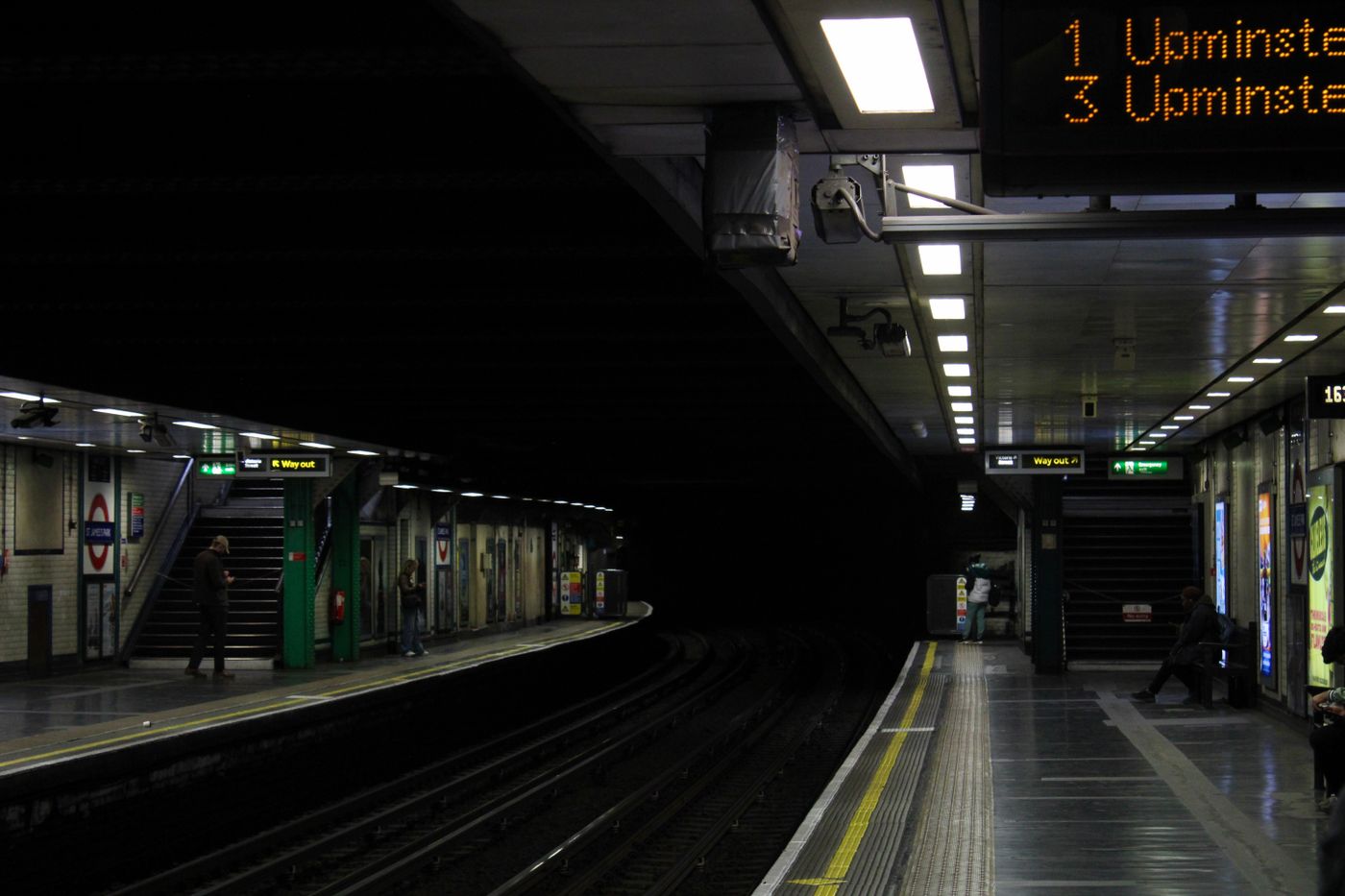
Efficient rather than unfriendly. Nobody speaks on the Tube, everyone helps if you actually ask, and the pace assumes you know where you are going.
Ask, do not wait
Slower, warmer and considerably chattier. Expect conversation at a bus stop and "my love" or "my duck" from strangers.
Chattier
Understated, dry and self-deprecating. Birmingham humour is relentless and affectionate; do not mistake it for hostility.
Dry humour
Markedly more direct, more likely to start a conversation, and more likely to tell you what they actually think. Also the friendliest.
Most direct
Etiquette questions
Reserved, not unfriendly, and the distinction matters. Nobody will start a conversation with you on a train, and almost everybody will help if you ask a direct question. The initiative has to come from you.
Stand at the bar, face it, make eye contact once, and wait. Bar staff track arrival order without any visible system. Waving, shouting or clicking will actively delay you.
Not at all — regional accents defeat English people too. "Sorry, could you say that again?" is entirely normal. Saying an accent is "hard to understand" lands worse than admitting you missed it.
No. Rounding up to the nearest pound is common and appreciated, but nothing is expected and nobody will react if you pay the metered fare exactly.
Nothing, generally. The English response is a pointed silence and a story told later. If it genuinely matters, "sorry, I think I was before you" is the full extent of acceptable confrontation.
Shake hands on first meeting, in a business or formal context. Among friends, nothing at all is common; a hug happens once you know someone reasonably well. Cheek-kissing is not standard.
Ask us
A wedding, a business dinner, a stay with English friends. Describe it and we will tell you what is expected and what genuinely does not matter.
Cookies, kept minimal
No preference saved yet
Essential cookies keep the site working. Optional ones tell us which guides get read so we know what to update. No ad networks, no data sold, and you can change this any time.